Costiera dei Cech
Balcone di Luce sulla Valtellina
In the heart of the Lower Valtellina, overlooking the Morbegno plain and kissed by the sun from morning to evening, lies an area as fascinating as it is still little known to the general public: the Costiera dei Cech. A succession of ancient villages, panoramic trails, terraced vineyards, and breathtaking views that tell a millenary story of mountain life, cultivation, spirituality, and hospitality.
For those seeking authenticity, tranquility, and scenic beauty, this corner of Lombardy is an ideal destination — and for those dreaming of a home immersed in nature, a true gem.
A natural frame between sky and valley
The Costiera dei Cech is a mountain slope located on the Rhaetian side of Valtellina, facing the city of Morbegno, and stretches between 400 and 1,200 meters in altitude. It is a sort of natural terrace facing south, enjoying constant sunlight and a particularly favorable microclimate. This has made the area habitable and cultivable since ancient times, as evidenced by the numerous villages dotted along the slope: Cino, Cercino, Mello, Civo, Dazio, Caspano, Roncaglia, just to name a few.
The geomorphological formation of the Costiera makes it unique in its kind: a long and gentle ridge that extends at the foot of the Western Rhaetian Alps, dominated behind by rocky peaks and open at the front towards the Adda River and the Colico plain. From here, the view is unparalleled: on clear days, the gaze stretches all the way to Lake Como and the Lecchese Prealps.
Origin of the name and cultural identity
The toponym “Costiera dei Cech” holds historical and linguistic connotations. “Costiera” obviously refers to its formation as a mountain ridge. “Cech,” according to some scholars, derives from “Cecc,” a dialectal abbreviation for “Francesi” (French) or “Franchi” (Franks), recalling ancient Lombard or Carolingian colonizations. Others instead argue for a more recent origin, linked to local families or popular names.
The area is strongly characterized by its own cultural identity, made up of stone architecture, farming traditions, local craftsmanship, and a strong religious presence, as evidenced by the numerous churches, chapels, and votive crosses found along the trails.
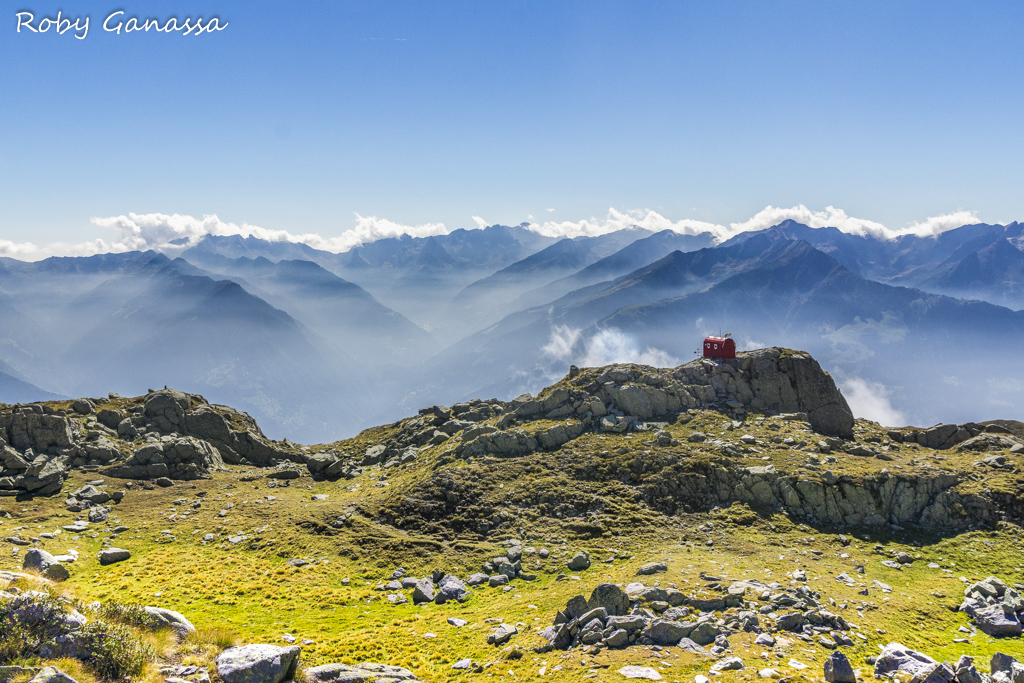
Bivacco Bottani
In the heart of the Lower Valtellina, overlooking the Morbegno plain and kissed by the sun from morning to evening, lies an area as fascinating as it is still little known to the general public: the Costiera dei Cech. A succession of ancient villages, panoramic trails, terraced vineyards, and breathtaking views that tell a millenary story of mountain life, cultivation, spirituality, and hospitality.
For those seeking authenticity, tranquility, and scenic beauty, this corner of Lombardy is an ideal destination — and for those dreaming of a home immersed in nature, a true gem.
A natural frame between sky and valley
The Costiera dei Cech is a mountain slope located on the Rhaetian side of Valtellina, facing the city of Morbegno, and stretches between 400 and 1,200 meters in altitude. It is a sort of natural terrace facing south, enjoying constant sunlight and a particularly favorable microclimate. This has made the area habitable and cultivable since ancient times, as evidenced by the numerous villages dotted along the slope: Cino, Cercino, Mello, Civo, Dazio, Caspano, Roncaglia, just to name a few.
The geomorphological formation of the Costiera makes it unique in its kind: a long and gentle ridge that extends at the foot of the Western Rhaetian Alps, dominated behind by rocky peaks and open at the front towards the Adda River and the Colico plain. From here, the view is unparalleled: on clear days, the gaze stretches all the way to Lake Como and the Lecchese Prealps.
Origin of the name and cultural identity
The toponym “Costiera dei Cech” holds historical and linguistic connotations. “Costiera” obviously refers to its formation as a mountain ridge. “Cech,” according to some scholars, derives from “Cecc,” a dialectal abbreviation for “Francesi” (French) or “Franchi” (Franks), recalling ancient Lombard or Carolingian colonizations. Others instead argue for a more recent origin, linked to local families or popular names.
The area is strongly characterized by its own cultural identity, made up of stone architecture, farming traditions, local craftsmanship, and a strong religious presence, as evidenced by the numerous churches, chapels, and votive crosses found along the trails.
Villages and architecture: a journey through time
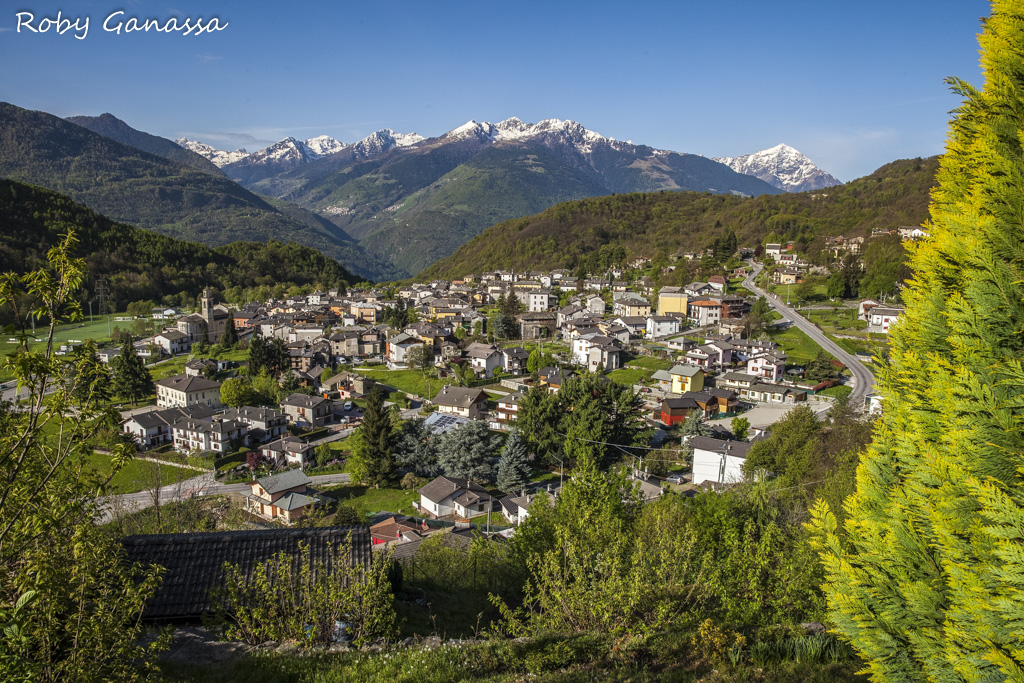
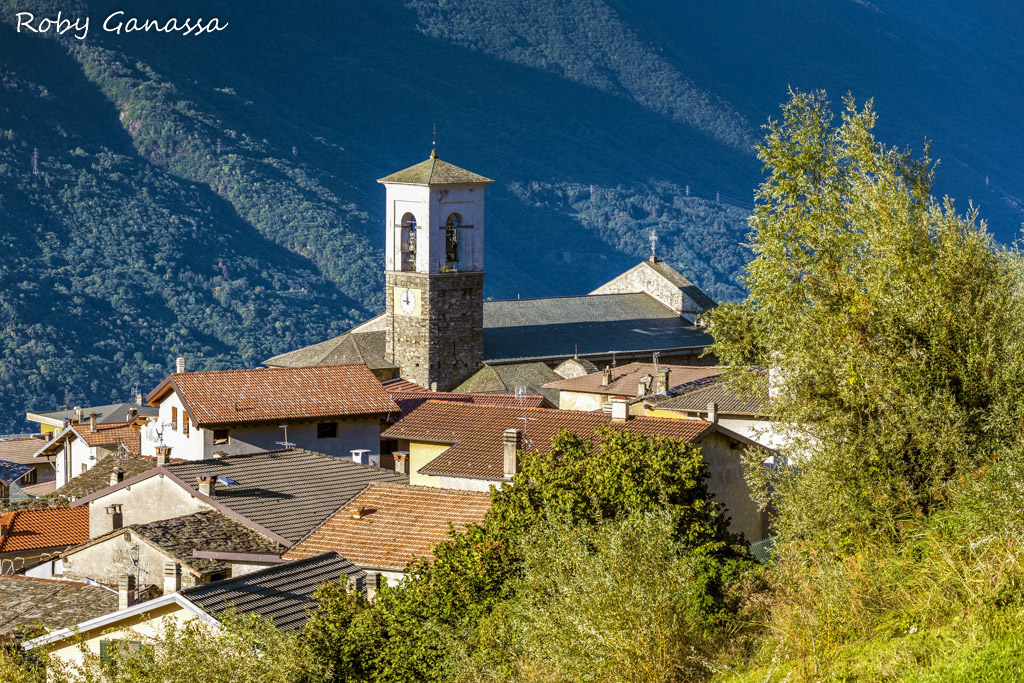
Each village of the Costiera has its own distinct soul, and passing through them one after another is like flipping through the pages of an illustrated book.
- Cino and Cercino preserve evidence from Roman and medieval times, with narrow cobblestone alleys and frescoed little churches.
- At Mello stands the majestic Castello di Domofole, an imposing structure dating back to the 11th century, symbol of the entire valley.
- Civo and its hamlet Caspano are instead famous for their agricultural terraces and typical stone houses.
- Colmen di Dazio, a dome-shaped isolated peak, is a privileged viewpoint, beloved by hikers and photographers.
Overall, the entire Costiera is a widespread architectural heritage, still largely authentic and untouched by mass tourism.
Hiking and outdoor experiences
Thanks to its gentle orography and the presence of well-marked trails, the Costiera dei Cech is an ideal destination for those who love to walk or cycle in peace. The area is crossed by a dense network of hiking trails winding through chestnut woods, pastures, cultivated terraces, and small rural settlements, offering breathtaking views of the lower Valtellina and Lake Como.
Among the most appreciated walks is the route from Campovico, near Morbegno, to Dazio along an ancient mule track, passing through vineyards and old stone farmhouses. It is an accessible walk, ideal for hikers of all levels, allowing you to appreciate the rural landscape of the Costiera in all its authenticity. As you gain altitude, more challenging routes appear, such as the one from La Piazza, in the municipality of Cino, climbing towards Monte Bassetta. This area is also suitable for circular trails, like the Vallone di San Giovanni route, which connects the villages of Bioggio, Civo, and Traona, following ancient paths once used by farmers and travelers.
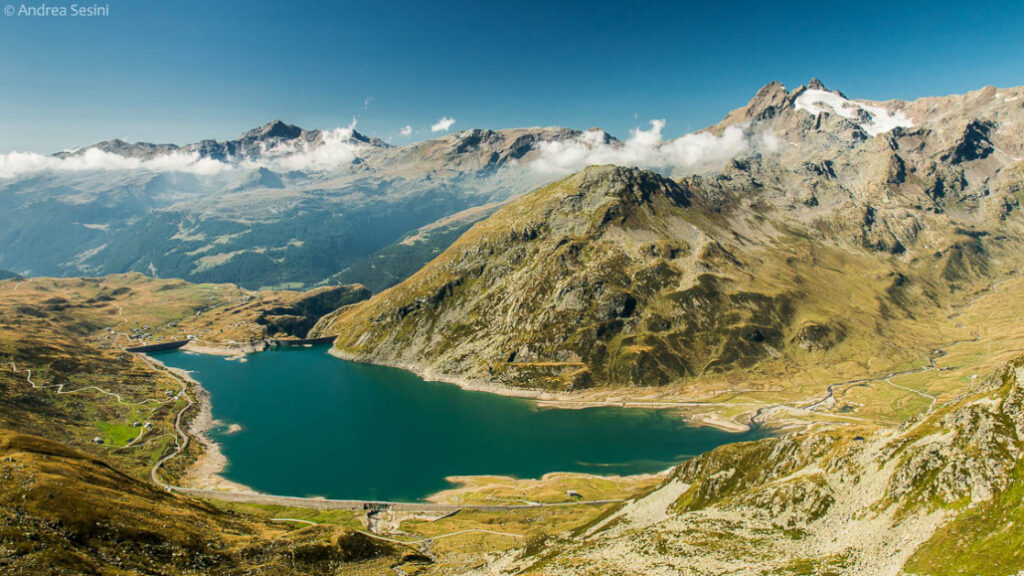
From an environmental perspective, special mention goes to the nearby Valle Spluga, reachable in about an hour by car from the Costiera. Here, the alpine environment becomes wilder and more unspoiled, offering the opportunity for highly charming hikes to the glacial lakes located above two thousand meters. The Lago di Spluga, for example, is a favorite destination for experienced hikers, thanks to its solitary setting and the intense blue of its waters, reachable via a route that takes about five hours round trip. More easily accessible is the Lago di Emet, nestled among the mountains just above the village of Montespluga: it can be reached in less than two hours along a well-marked itinerary, immersed in an extraordinarily scenic alpine landscape.
The Montespluga area also hosts the homonymous artificial lake, dominated by an imposing dam and surrounded by rocky peaks. From here start numerous routes, including the famous Via Spluga trail, which connects Italy to Switzerland following a path of great historical, cultural, and scenic significance.
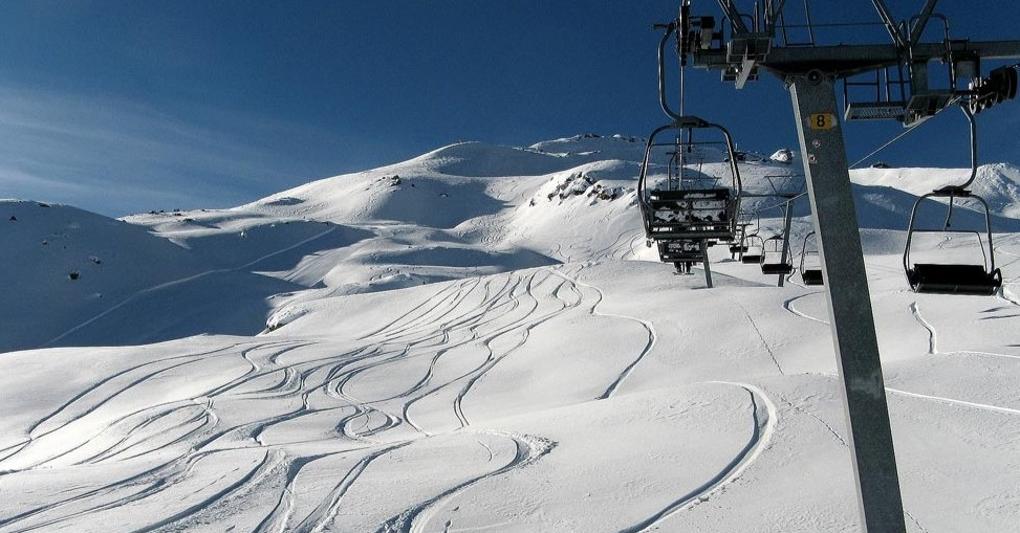
The Costiera dei Cech and the surrounding areas are not only a natural treasure to explore but also a lively and dynamic setting where it is possible to engage in outdoor activities throughout the year. In summer, hiking, mountain biking, climbing, and canyoning attract active visitors seeking authentic experiences. In winter, the nearby Madesimo ski area and the Montespluga plateau become popular destinations for snow activities, including ski mountaineering, snowshoeing, and even snowkiting on the frozen lake.
Tourist services are well developed, thanks to the presence of alpine huts, farm stays, refreshment points, and accommodation facilities that ensure hospitality and quality.
The area is also perfect for those who practice nature photography, birdwatching, or simply seek places to slow down and reconnect with nature.
Food and wine: authentic flavors of Valtellina
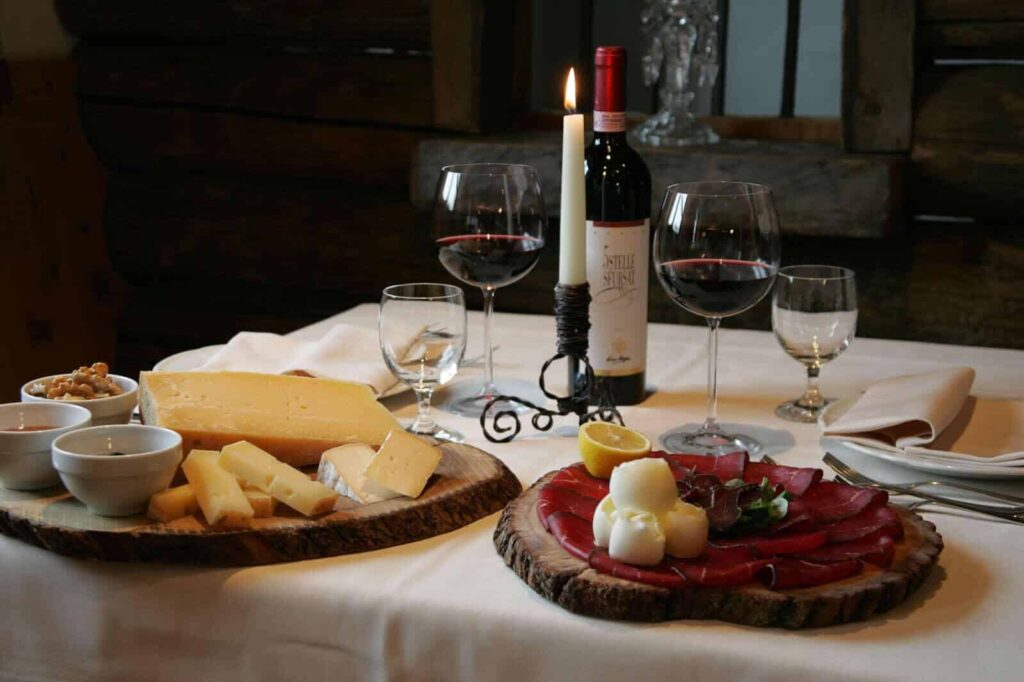
A stay or even just a visit to the Costiera dei Cech cannot do without experiencing the local gastronomy, proudly linked to the traditions of Valtellina.
In trattorias and farm stays, you can enjoy:
Valtellina pizzoccheri, made with buckwheat flour;
Sciatt, typical cheese fritters;
Taroz, a peasant dish made with potatoes and green beans;
Local cured meats such as artisanal bresaola;
And naturally, the Valtellina red wines, especially Nebbiolo (locally called Chiavennasca), grown on dry stone walls along the terraces.
In autumn, the area hosts major food and wine events such as “Gustosando in Valtellina”, during which you can taste specialties directly in the villages.
Living or investing in the Costiera: quality of life and real estate potential
For those looking for a place to move to, buy a second home, or start a hospitality business, the Costiera dei Cech represents a strategic and charming choice.
Advantages:
Property prices are still affordable;
Proximity to Morbegno, Colico, and the SS36 highway;
Outstanding natural and cultural environment;
Opportunities for tourism development (B&Bs, holiday homes, farm stays).
The sunny location and quality of the air, combined with tranquility and the beauty of the landscape, make these places ideal for those seeking a slower, more authentic lifestyle without sacrificing the convenience of services.
The Costiera dei Cech is not just a place to visit: it is a world to discover and, why not, to live in.
Here, you can breathe a rare balance between man and nature, between culture and landscape. It is the perfect destination for a weekend getaway, but also a territory to invest in, grow, and put down roots.
If you are looking for properties for sale, rustic homes to renovate, or turnkey solutions in this wonderful corner of Valtellina, La Baita Case is by your side to guide you in making the right choice.
Other news